Amaryllis Care Guide: How to Plant, Grow, and Rebloom Bulbs

Updated: 11 hours ago
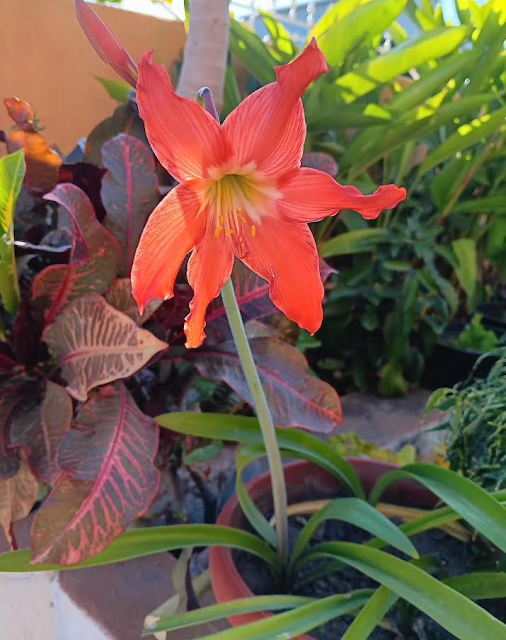
Every garden has its absolute show-off, and this season mine is undeniably the Amaryllis. With blossoms so bold, vibrant, and massive they look like nature's own trumpets announcing the arrival of a royal court, this striking plant truly knows how to command a room.
But do not let its highly luxurious, dramatic appearance fool you. Beyond its show-stopping beauty, the amaryllis (Hippeastrum) is secretly one of the easiest flowering bulbs to grow. It is absolutely perfect for beginners, busy plant parents, and small-space gardeners who want maximum visual reward with minimal effort. In this comprehensive guide, you will learn exactly how to plant, water, and care for your amaryllis bulb so that it returns to bloom beautifully year after year.
In This Guide
What Makes Amaryllis So Special
Step-by-Step Bulb Planting Guide
Sunlight, Soil, and Hydration Rules
Adapting Amaryllis to Warm, Tropical Climates
Essential Post-Bloom Care
The Ultimate Secret to Forcing a Rebloom
Common Mistakes to Avoid
Frequently Asked Questions
What Makes Amaryllis Special?
Unlike typical garden plants that require months of meticulous grooming before offering a tiny blossom, the amaryllis is a powerhouse packed inside a single bulb.
Gigantic Blooms: A single bulb can produce multiple sturdy stalks, each bearing clusters of dramatic, trumpet-shaped flowers reaching up to 8 inches wide.
Rich Color Spectrum: They come in a spectacular array of colors, from rich crimson reds and snowy whites to soft pinks, peaches, and striking multi-colored striped varieties.
Long-Lasting Performance: Individual flowers last for up to two weeks, giving you a continuous living centerpiece for nearly a month.
Deep Cultural Meaning: Rooted deeply in ancient Greek mythology—named after a determined nymph who shed her own blood to prove her love—the amaryllis traditionally symbolizes radiant beauty, inner strength, and absolute devotion. It is a profound story written in vivid petals.
How to Plant Amaryllis Bulbs Correctly
When it comes to planting an amaryllis bulb, the biggest secret lies in the size of the container and how deep you set the bulb.
       (   Top 1/3 Exposed   )  <-- Do NOT bury this part!
     =========================  <-- Soil Line

     |  (   Bottom 2/3   )   |
     |   [  Root System ]    |  <-- Snug fit: 1 inch of space around bulb
     -------------------------
Embrace a Snug Fit: Amaryllis plants absolutely love being pot-bound. Choose a sturdy pot with excellent drainage holes that is only 1 to 2 inches wider than the bulb itself. If the pot is too large, the excess soil will retain too much moisture, which can easily trigger bulb rot.
Expose the Shoulders: Fill your container with a lightweight, premium potting mix. Situate the bulb so that the top third of the bulb remains completely exposed above the soil line. Never bury an amaryllis bulb all the way to its neck!
Tamp and Anchor: Press the potting medium firmly around the base of the bulb to anchor it securely. Because the flower stalks grow incredibly tall and top-heavy, a loose bulb will easily tip over.
Sunlight, Soil, and Water Management
The Lighting Strategy
Amaryllis requires bright, indirect to full sunlight, aiming for at least 6 hours of quality light every single day. A bright windowsill or a sheltered, sunny balcony is absolutely ideal. As the flower stalk begins its rapid ascent, it will naturally bend directly toward the light source. To keep your stems growing perfectly straight and stately, simply give the pot a half-turn every couple of days.
Soil and Drainage
The absolute golden rule of bulb gardening is that good drainage is non-negotiable. Use a light, fast-draining potting mixture heavily amended with coarse sand, perlite, or coco coir. Avoid dense garden loam or heavy backyard soils that trap water. If an amaryllis bulb sits in a waterlogged, stagnant puddle, the roots will quickly disintegrate and the bulb will turn mushy.
The Watering Trick
Watering an amaryllis requires a bit of strategy. Water very sparingly at first—just enough to lightly moisten the soil when you first plant the bulb. Hold off on heavy watering until you see green growth emerging from the top of the neck. Once the leaf tips or the flower bud burst forth, increase your watering frequency, keeping the soil lightly and consistently moist but never soggy.

Growing Amaryllis in Tropical Climates (Like Jamaica!)
While many cold-climate gardeners grow amaryllis strictly as an indoor holiday plant, it thrives outdoors beautifully year-round in warm, tropical environments like Jamaica!
Outdoor Integration: You can plant them directly into raised garden beds or display them in decorative terracotta pots on your patio.
Midday Shield: While they adore the sun, our intense, blazing tropical afternoon rays can bleach the delicate petals. Give them a spot that enjoys full morning sun but receives dappled afternoon shade.
The Rainy Season Defense: In tropical zones, drainage is far more critical than watering frequency. If your area experiences a heavy rainy season, keep your amaryllis in containers so you can move them under a porch roof to prevent the bulbs from getting flooded and drowning.
Care After Flowering: The Energy Storage Phase
Once those gorgeous blossoms finally fade, many beginner gardeners make the tragic mistake of tossing the entire plant away. Don’t do that! Your amaryllis is alive and well, and it is already preparing for next year’s show.
Remove the Stalk: Use a sharp, clean pair of pruning shears to cut the spent flower stalk off about 2 inches above the bulb. Do not cut the leaves!
Grow the Foliage: Treat the plant like a beautiful, green houseplant. Place it in a sunny spot, water it regularly, and feed it with a balanced liquid fertilizer every two weeks. The long, strap-like green leaves act like solar panels, absorbing sunlight and storing vital nutrients directly back into the bulb to fuel future blossoms.
How to Force Your Amaryllis to Rebloom
To get an amaryllis to flower again, you have to mimic nature by giving the bulb a mandatory rest period (dormancy). Follow this exact timeline to unlock a brand-new cycle of spectacular blooms:
Step 1: Grow Leaves ──> Step 2: Stop Watering ──> Step 3: Dark & Dry ──> Step 4: Re-pot & Wake Up
(Spring/Summer)         (Late Summer/Fall)       (6-8 Weeks Rest)       (6-10 Weeks to Bloom)
The Wind-Down: After allowing the leaves to grow lush and green for several months, completely stop watering the plant and stop fertilizing.
Induce Dormancy: As the soil dries out completely, the leaves will naturally turn yellow and wither away. Cut the dead foliage off at the neck of the bulb.
The Deep Rest: Move the dry pot (with the bulb still inside) into a cool, dark, and dry space—like a closet, a cupboard, or a shaded cellar floor—for 6 to 8 weeks. Do not give it a single drop of water during this resting phase.
The Awakening: After 8 weeks of rest, bring the pot back out into a warm, bright room, refresh the top layer of soil, and give it a thorough watering. Within 6 to 10 weeks, a magnificent new flower stalk will come bursting back to life!
Common Mistakes to Avoid
Overwatering the Bulb: Watering too heavily before the green sprout appears is the number one cause of bulb rot.
Cutting Leaves Too Early: Trimming away green leaves starves the bulb, ensuring it will never have the energy to produce flowers again.
Skipping the Rest Period: Forgetting to give the bulb a dark, dry dormancy period means the plant will only produce green leaves without ever throwing a flower stalk.
Pet Safety Warning: Keep in mind that amaryllis bulbs contain lycorine and are toxic to cats and dogs. Be sure to place your containers on high tables or windowsills completely out of reach of curious paws.
Frequently Asked Questions
Q: How long does it take an amaryllis bulb to bloom?
A: Once a rested bulb is brought out into the light and watered, it typically takes anywhere from 6 to 10 weeks to put on a full floral show.
Q: Can I leave my amaryllis in the ground outdoors in Jamaica year-round?
A: Yes! As long as your garden bed has superb, gravelly drainage that won't hold stagnant water during tropical downpours, the bulbs can remain in the soil.
Q: Why did my plant only grow leaves this year without any flowers?
A: This usually means the bulb didn't store enough energy during the previous season. Make sure to keep the leaves healthy in full sun and fertilize them well after the flowers fade next time.
Conclusion
An amaryllis feels exactly like a vibrant celebration in a pot. It is wonderfully simple enough for absolute beginners to find instant success, yet dramatic enough to completely steal the spotlight in any home or garden landscape. It stands as living proof that a single, well-cared-for bulb has the power to transform a plain windowsill, a quiet balcony corner, or a small patio table into something truly extraordinary.
Start with just one healthy bulb, give it the right balance of sunlight, water, and rest, and enjoy the magnificent show!
Until next time — keep your hands in the soil, your heart light, and let joy grow.
With love from Hopey’s Garden.

Comments